Free Cisco Written Dumps
For Top 50 Purchases 01:59:56
X

- 7740 Reviews
ccie lab changes
View the spanning tree status (3500xl) Q: What drives you to pursue multiple CCIE qualifications? Lab 3-1: Configuring NAT Ip add 10.1.1.1 255.255.255.0 Finally, express your feelings, “Calmly take care of everything that happens, and have a good mentality.” To understand the problem-solving ideas of the biscuit teacher, don’t memorize it! A(config-keychain-key)#exit =========================================================== ============== 2.Client mode The neighbor discovery process implements the DAD function: Show ip access-lists 3 . Week when the period of notice B(config-if)#ip nat inside PPP: When the PC gets the IPV6 address and then sends the NS, the DAD is completed. What are the differences between OSPFv3 and OSPFv2? Q: In the last days, will you qualify for the fifth CCIE? Ip address 2001::1/64 10Mbps 100 8. Let's talk about the difference between ISIS and OSPF. Can not be deleted . The 3550 supports 802.1Q and The rhythm of the day is to adjust the biological clock, then review the version of the idea in the morning and afternoon, and back the DIAG's answer and ideas every day. On average, it is 3 hours a break. A very relaxed state. On the day before the exam, my schedule is like this: Enter into slot 0 of the number is 1 Ethernet port The PC obtains the 64-bit prefix and then uses the EUI-64 format to generate the port ID based on the MAC. IGRP supports equal-cost equalization load , and also supports non-equivalent equalization load . Interface fastethernet 0/1 1 ISIS OSPFv3 Login =========================================================== =============== The third stage: One hour after I knocked the version, the next girl went out. Then I came back to cry. When I came out, I glanced at version 3. I said, "Come on, don't give up." I don't know if there is any encouragement! ! (The above information is what I saw on a website about the Internet, including information about CCIE routing and switching, security, wireless, big data, etc., I recommend you to visit) ACL for packet processing : Tuning and Troubleshooting NAT on the Cisco ASA Adaptive Security Appliance twenty three Standard access control list : only detect source address Extended access control list : source address , destination address , protocol , port 3. The source address of the protocol packet in RIPng is the link-local unicast address. Securing networks that use managed services, dual ISPs, IPv6, or IP multicast Lab 4-3: Configuring Cut-Through Proxy Now up-to-date, real-world content. It emphasizes security competency and Note : as you are willing to go, as long as you don't give up. My 0200:0000:0000:0EFA:0000:0000:0000:ABCD Routers in the same autonomous system are able to learn to advertise related routes to each other . View the spanning tree status (3500xl) This is not the end point, not even the starting point of the end point, but it may be the end point of the starting point. --Winston Churchill 1. Agreement. The structure of the package is different best, it is only the general role of typing workers and porters. (I will repeat the repetitive pre-sales bidding called the typewriter, and the after-sales equipment is called the porter). 3.Two-Way IPV6 routing protocol will be nowhere in sight, and the ccie certificate you get will be Management Distance : decisions routes which generate a given routing protocol will be adopted by the router . Tube lower management more likely to be taken from the router Time Node 9: In January of the following year, I and another person participated in the company's middle management meeting for the first time after 90. I conducted a review and summary of the team's personal work for the whole year. I really stood in a different perspective and saw my own. Innocent and love for Team. Three forwarding modes of the switch : The communication between the B server and the A server is very good. B judges that A and itself are not in a network segment, and directly delivers the packet to the gateway. If there is no gateway, the request packet of B cannot reach the A server at all, so B and The result of A communication is that the data packet cannot arrive! 2. When the target address is unknown , the switch will flood the data frame ( the target address is known , the frame will not be flooded ) ***, Qos, safe. When I was doing it, I slowly learned what the company’s original CCIE said. I think I should be able to test CCIE now! 3. The twisted pair transmission distance is 100 meters . interface fastehternet 0/1 enter into fa0 / 1 Interface (It took half a month for troubleshooting 1 (1-BT7) and 5 days for TS2) => Network map 1. Connect to a service . 2. Connect based on virtual link Ipv6 nat v4v6 source 192.168.1.2 2001::3 Q3: I didn't solve it, I gave up decisively, the R23 neighbor had it, but I didn't receive the route of 10.2.100/24. IGP checked no problem, and the BGP policy was fine. Provisions address pool empty idle IP 1. Control network traffic look back. He told me that I am confused. I don’t know how to learn. I OSPF area : 2. Tunnel technology IPV6 communication between IPV6 networks (main), IPV6 communication between IPV4 networks Segment to learn, the passion for learning, the determination to learn, and the 2) Usually all interfaces of the root bridge are designated ports Startup -config will be actively loaded every time the router or switch is started . continued. My request for myself is to spend four hours to solve an =========================================================== =============== B#show ip nat translations view translation relationship table 2. Which routes are included in the routing table of isis level1? When there are multiple level-1-2 exits, where do other routes learn from, how to choose a route? 2 Those hosts can be predetermined feed line N A T B(config)#access-list 1 permit any Create a loopback interface Lab 3-3: Configuring Transparent Firewall (Optional) Invoke this application only for disaster recovery. 3. Router discovery: stateless automatic acquisition of address Different products from different manufacturers have different support for URFP functions. For specific applications,ccie lab changes, please check the related product manual to confirm the implementation of the device. Module 2: Basic Connectivity and Device Management Fix: After modifying the IPSEC algorithm, the s version /no s version is fine. 14. What is the difference between local-pre and weight? WAN : 172.16.3.1 Q9: tunnel key error EGPs: External Gateway Routing Protocol , Maintaining Routes between Autonomous Systems Interfaces that are blocked will not receive / send user data . Copy flash: tftp: 1.cisco hdlc: An environment that can support multiple protocols , which is implemented by adding the " property " field . have been busy experimenting with experiments, but I have not absorbed Configuration key chain A Encapsulation frame-relay End Fix: Reconfigure R15 after IGP recovery Time node 3: At school, I personally belong to the normal student of the biological clock, and even my own talent is not enough, I need to work hard to understand the truth of "diligence can make up" A: When I graduated from school in September 1997, I joined the TAC (Cisco Technical Support Center). In TAC, we are expected to be eligible for CCIE as a technical staff member. In fact, recalling that time, if you did not qualify for CCIE, then the promotion of employees is limited, at least at that time we all think so. Because it is necessary to have all the technical and product information, the taste of being an engineer at TAC is as good as drinking water from a fire hose. Therefore, after ten months, when I felt that I was familiar with the technology, I began to prepare for the CCIE lab exam.
CCIE Routing and Switching LAB Dumps
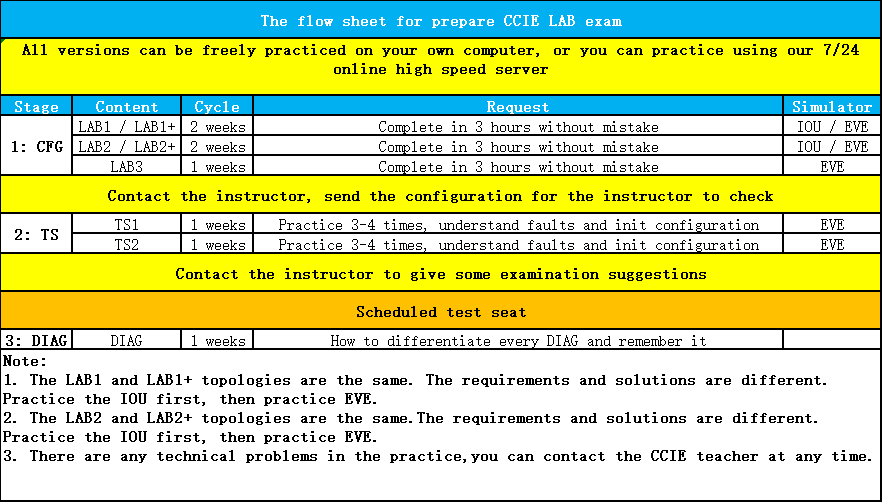
Exam Code: CFG: LAB1、LAB1+、LAB2、LAB2+、LAB3
TS: TS1(5 sets)、TS2(3 sets)
DIAG:DIAG 1~DIAG 8(8 sets)
Certification Provider: Cisco
Certification Exam Name:CCIE Routing and Switching Lab
Update Date: Sep 13,2026
Latest Dumps
Numbers of Question & Answers
Numbers of Question & Answers
ccie lab changes
Here is the most accurate CISCO CCIE WRITTEN exam questions and answers. All study materials need to be carefully selected by professional certification experts to ensure that you spend the least amount of money, time, and pass the high quality exam. There is also a professional service team that can customize your study plan for you to answer all your questions, PASSHOT's CCIE Written Dumps is definitely the biggest boost for you to test CCIE that helping you pass any Cisco exam at one time.
SECTION 1 LAYER 2 TECHNOLOGIES
Section 1.1: LAN Access
The following requirements were pre-configured
l VTP is turned off in all switches
l All required VLAN, including access-ports configuration in all relevant switches are provisioned.
l All required SVI interface in all relevant switches (including IP address and subnets mask) are provisioned.
Configure the network in all sites as per the following requirements:
l Access-port must immediately transition to the forwarding state upon link up, as long as they do not receive a BPDU. Use the minimal number of commands per switch to enable this feature.
l If an access-port receive a BPDU, it must automatically shutdown. Use the minimal commands per switch to enable this feature.
l Ports that were shutdown must attempt to automatically recover after 10 minutes.
l None of the switches may generate a TC.
section 1.2: LAN distribution
configure the headquarters’ network as well as the large and medium office networks as per the following requirements:
l all trunks must use dot1q encapsulation
l negotiation of trunking protocol must be disabled in all switches
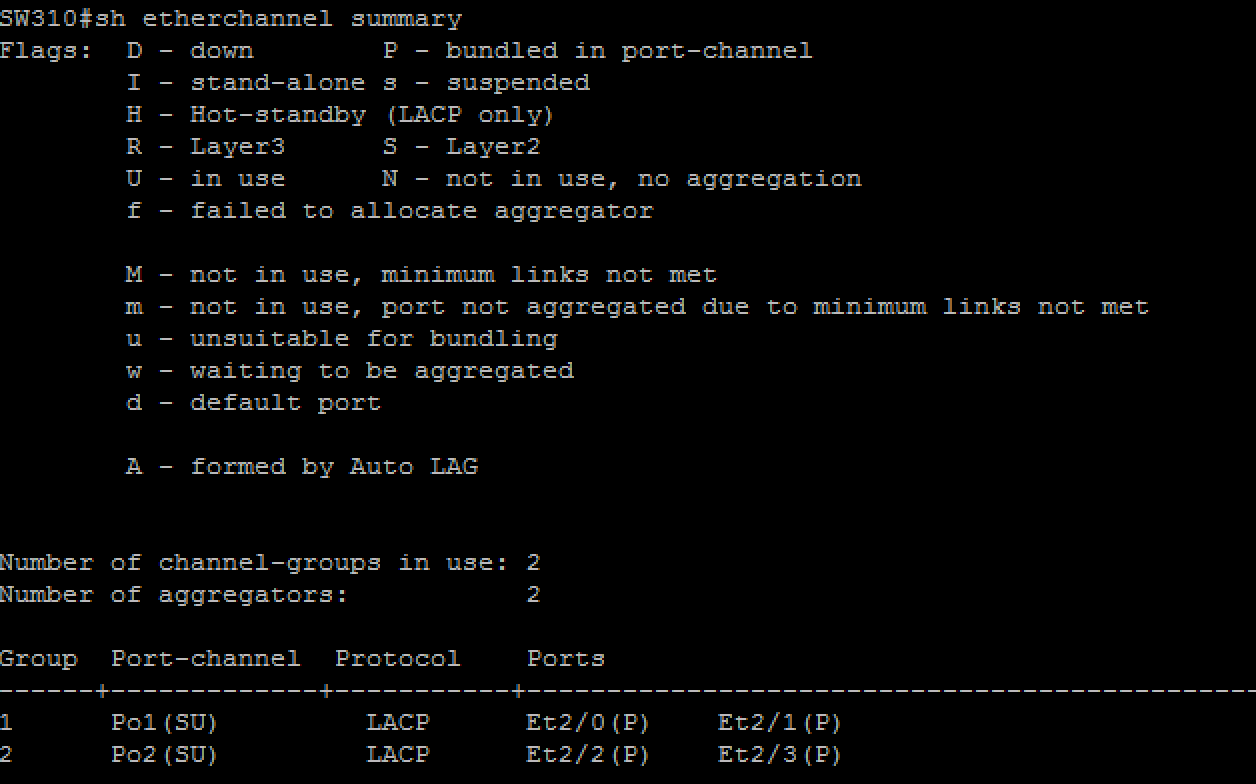
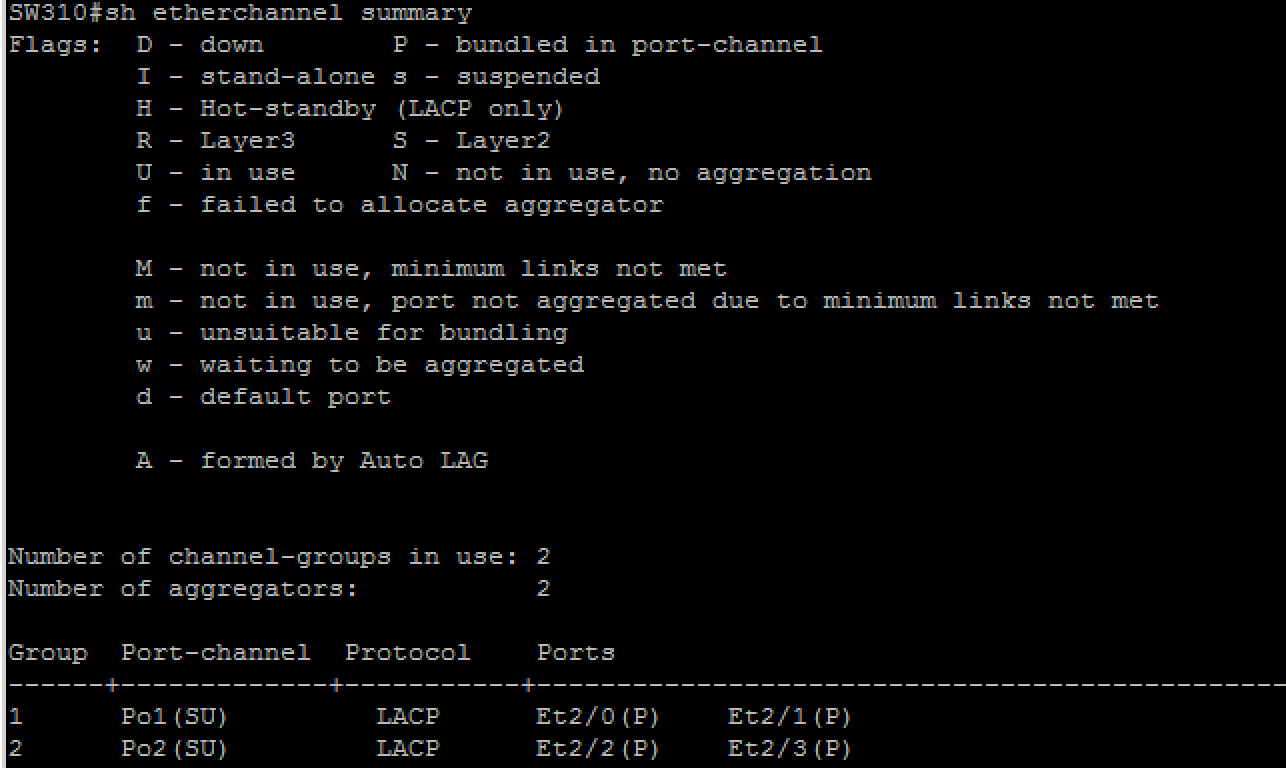
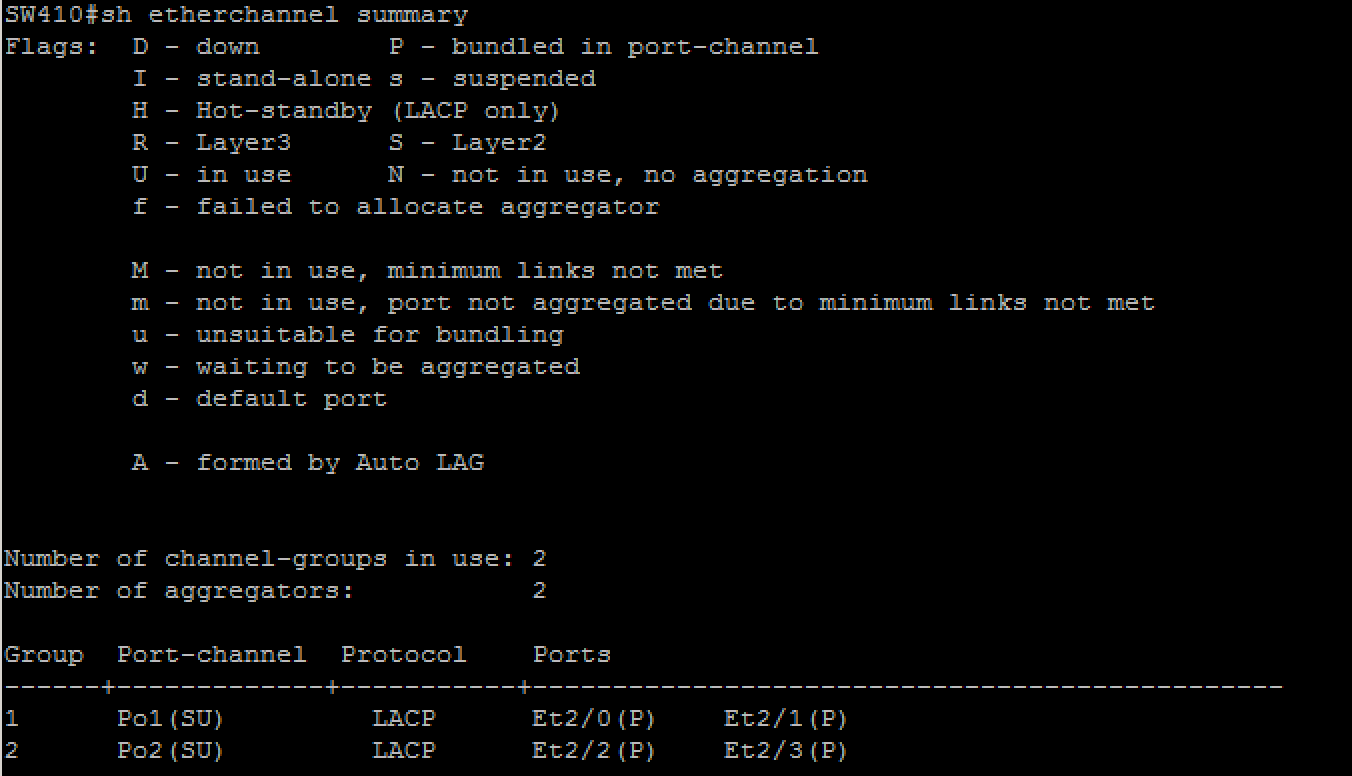
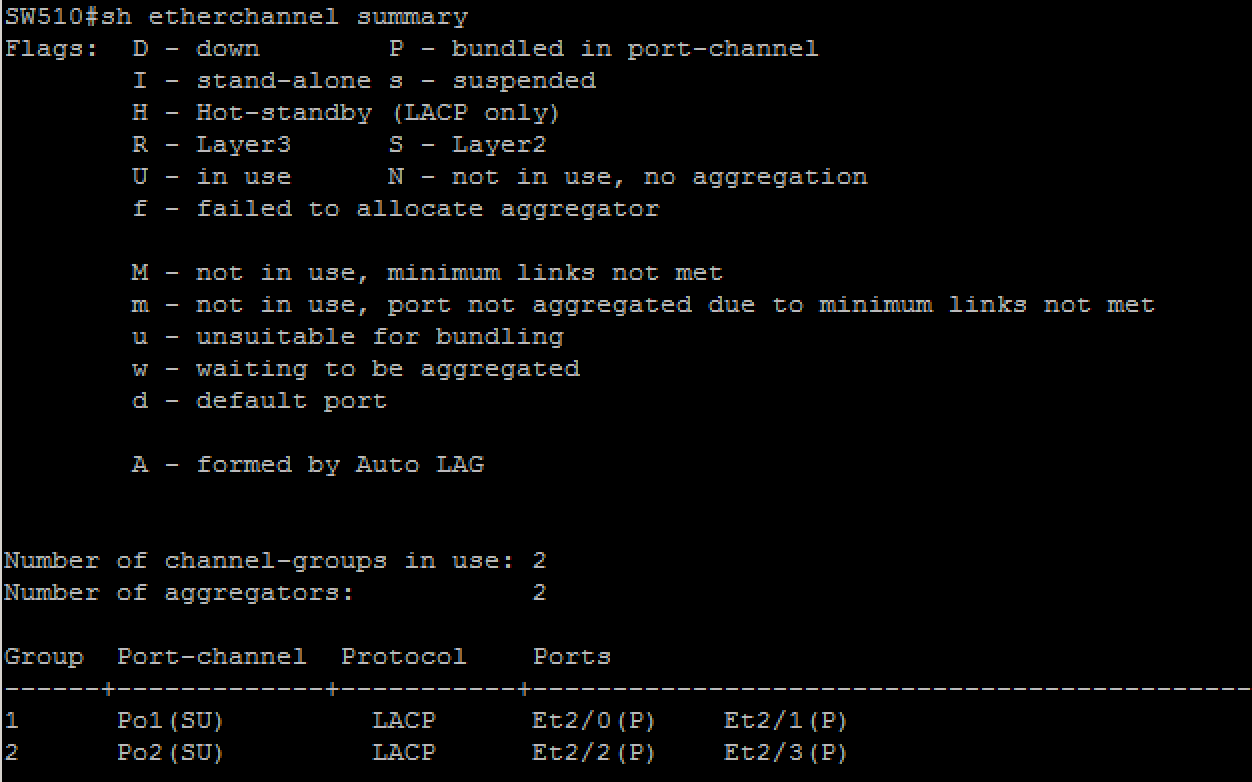
l distribution switches (SW300, SW301, SW400, SW401, SW500, SW501) must initiate etherchannel negotiation using LACP
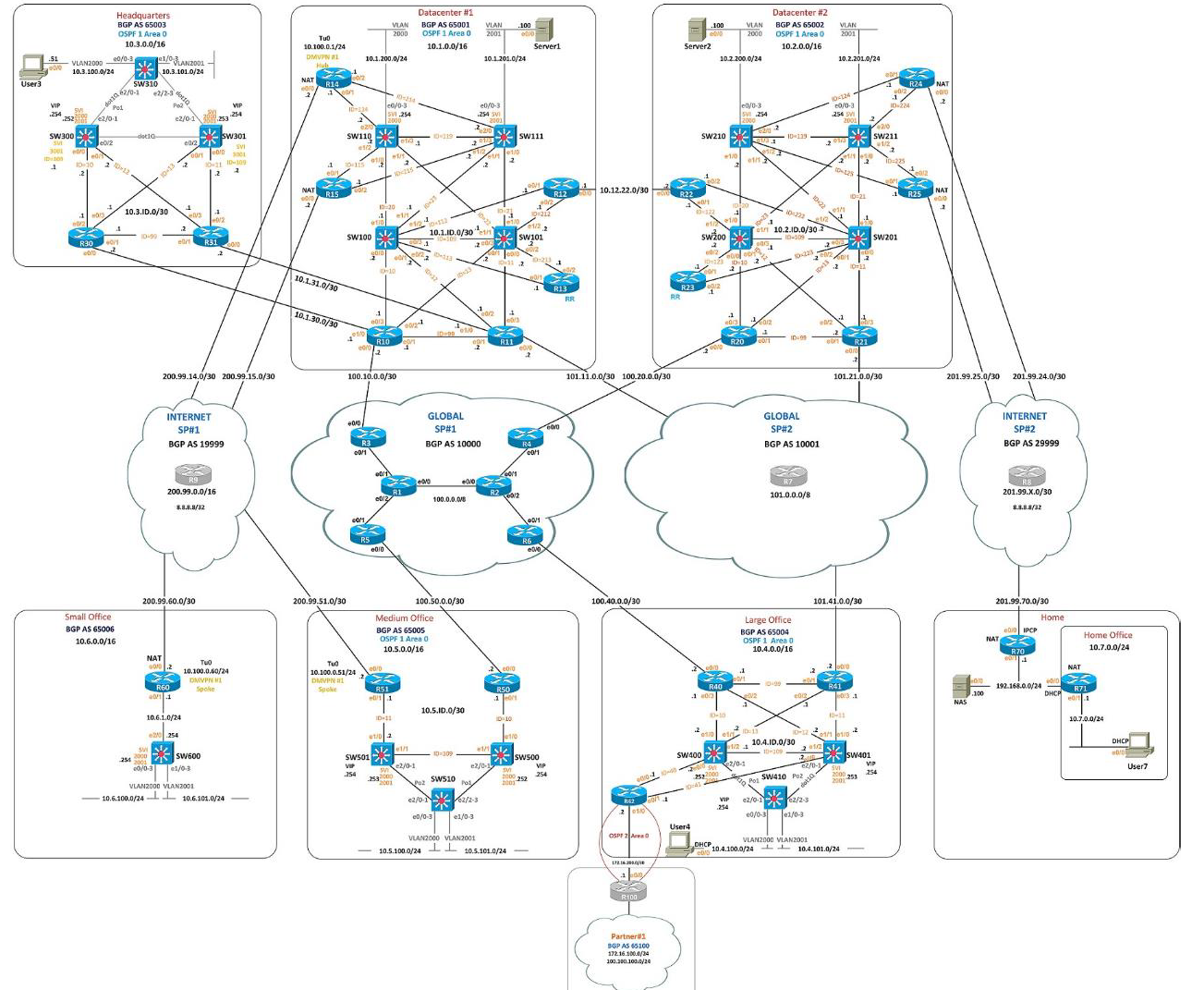
l configure layer 2 etherechannel’s number as shown in the ‘diagram 1: main topology’ and ‘diagram 5: layer 2 connections’ (that is use only Po1 and/or Po2)
l ensure that all ports included in etherchannels are effectively in use and bundled in the expected channel
l access switches must see similar output as shown below:
section 1.3: LAN resiliency: spanning-tree
configure the headquarters‘network as per the following requirements:
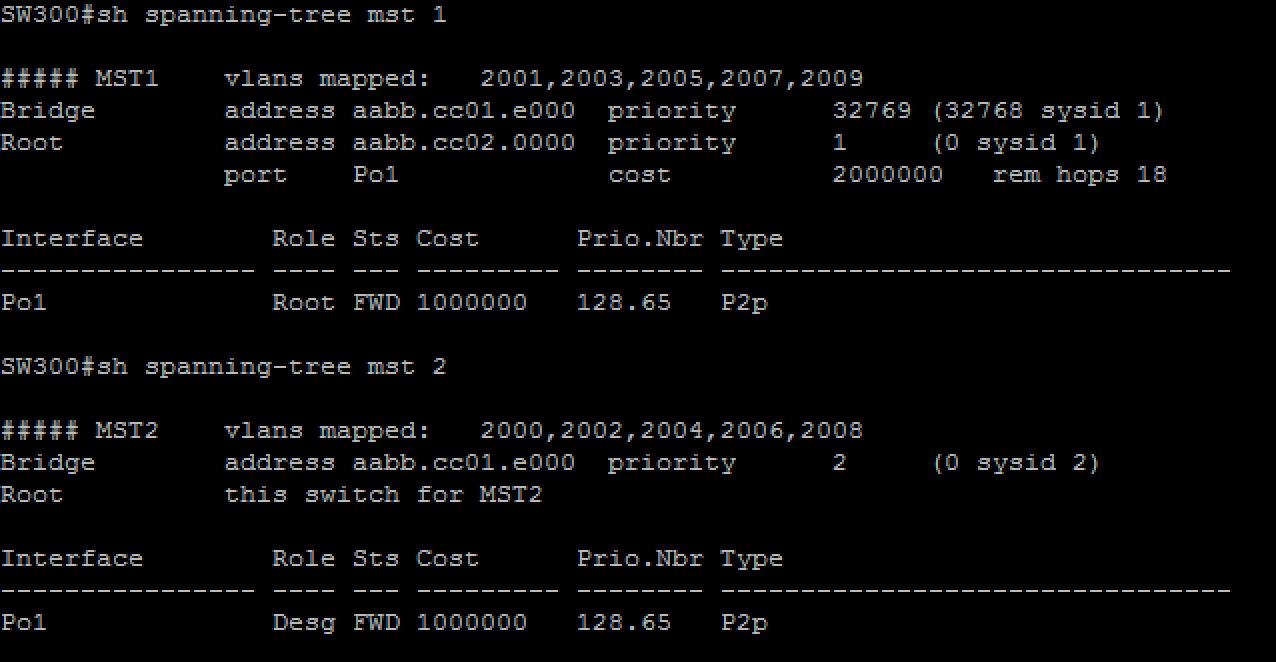
l SW300 must be the spanning-tree root bridge and must maintain a single spanning-tree instance for the following VLANs: 2000, 2002, 2004, 2006, 2008 (use instance number 2)
SW301 must be the spanning-tree root bridge and must maintain a single spanning-tree instance for the following VLANs: 2001, 2003, 2005, 2007, 2009 (use instance number 1)
l all other VLANs, except 3001, must share the default spanning-tree instance
l ensure that interface E0/2 of SW 300 and SW 301 is a dot1q trunk and that it switches frames for VLAN 3001 only
l SW300, SW301, and SW 310 must not have any blocked ports for any access VLAN (2000-2009)
l SW310 must have the least chance of being elected the root bridge for any VLAN
l none of the three switches may run more than four instance of spanning-tree at any point in time
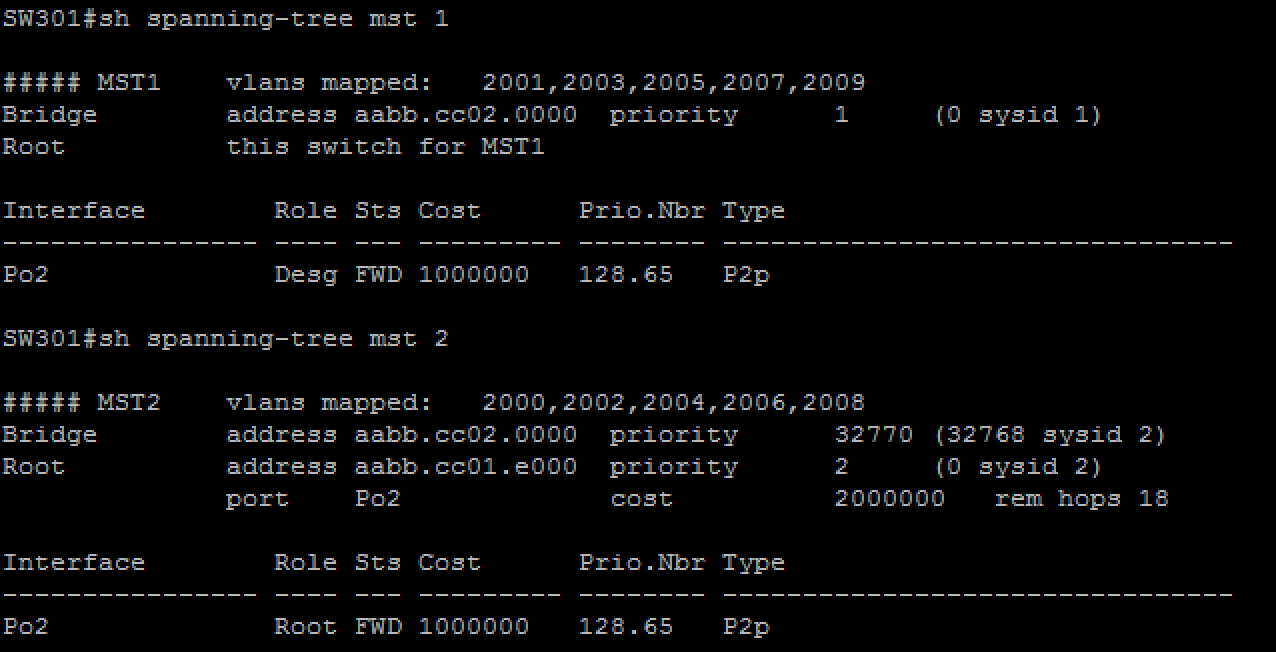
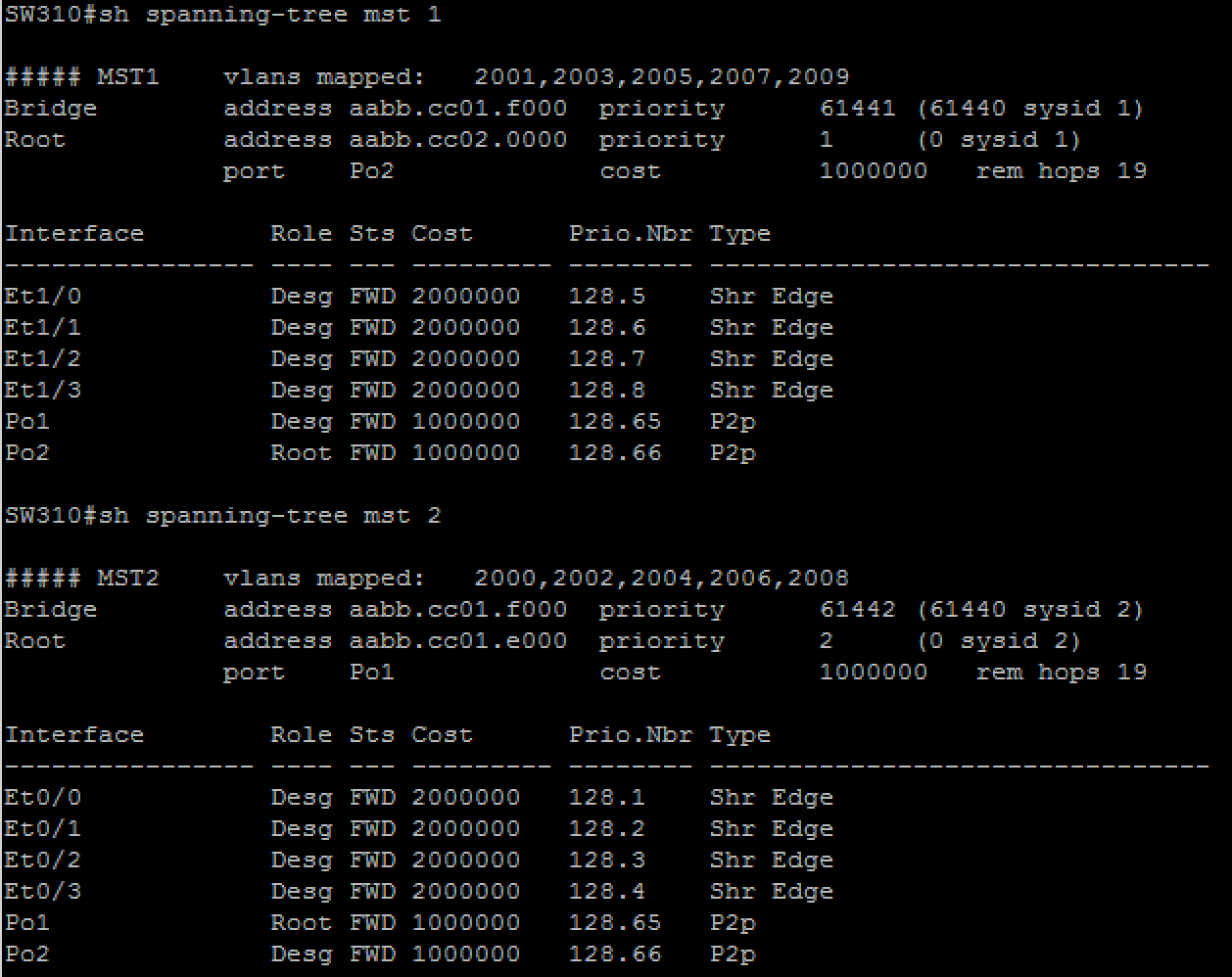
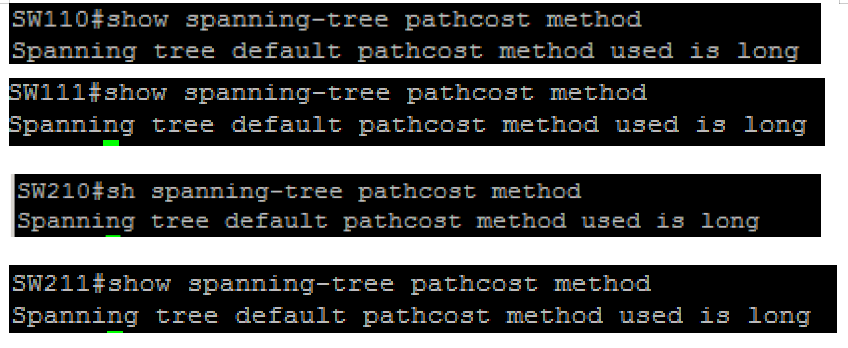
configure all access switches in both datacenter networks (SW110, SW111, SW210, SW211) as per the following requirements:
l use 32-bit based values for the default port path cost
l all four switches must use the default value for their interface cost
section 1.4: WAN switching technologies
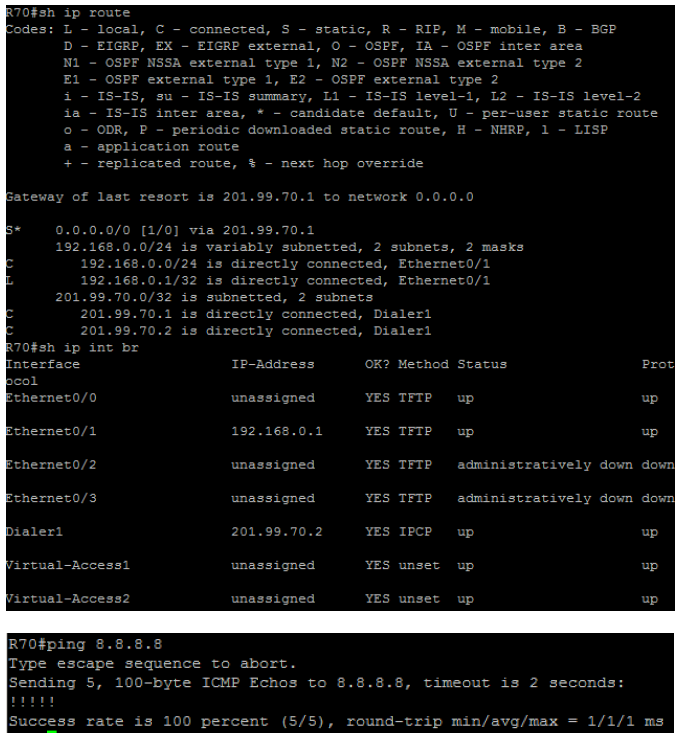
configure the home router R70 as per following requirements:
l the Ethernet WAN link must rely on a layer 2 protocol that supports authentication and layer 3 protocol negotiation
l the service provider expects that R70 completes a three-way handshake by providing the expected response of a challenge requested
l R70 must use the hostname “R70”and password “CCIE” (without quotes)
l R70 must receive an IP address from R8 and must install a default route pointing to 201.99.8.8
l ensure that R70 can successfully ping 8.8.8.8, which is located in the ISP#2 cloud
l you are not allowed to configure any static route in R70 in order to achieve the previous requirements
l use the pre-configured Dialer 1 interface as appropriate
section 2 layer 3 technologies
section 2.1: OSPF in HQ
configure the headquarters network (BGP AS#65003) as per the following requirements:
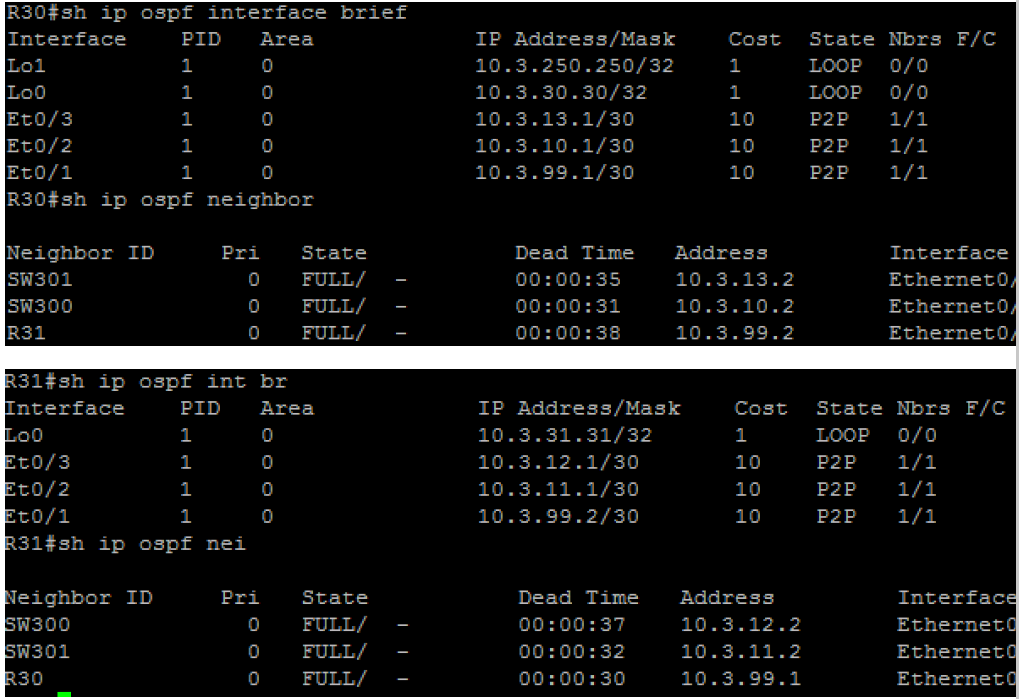
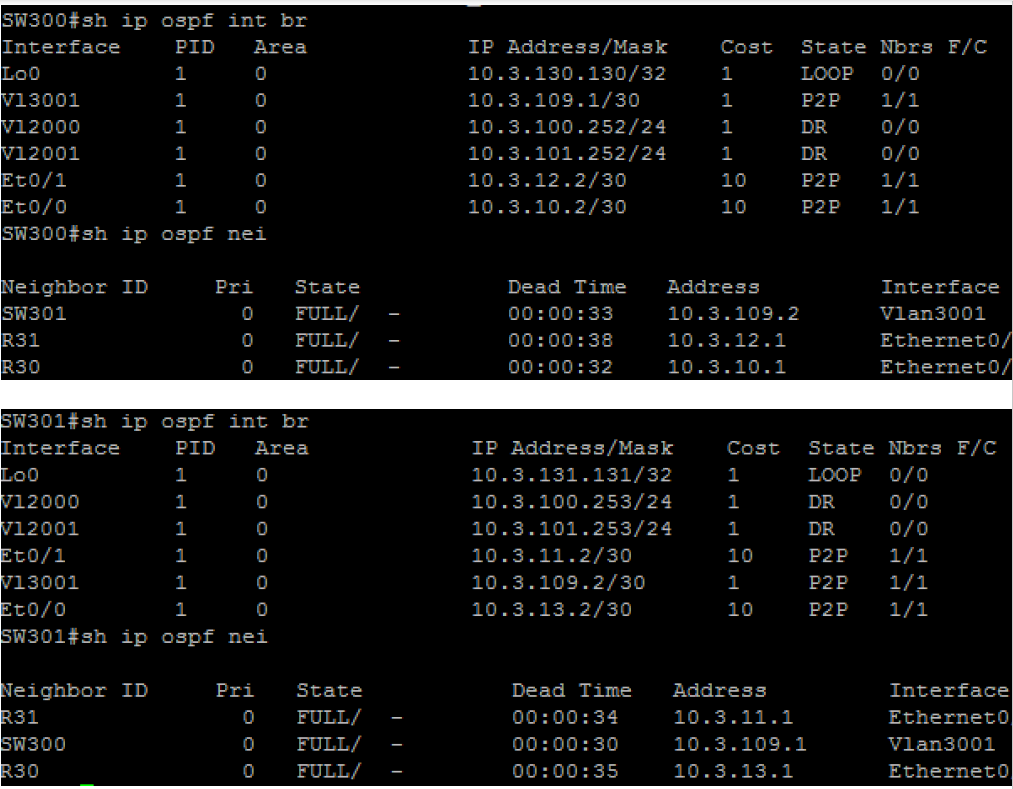
l both gateway routers of the headquarters network must always advertise a default route into the ospf domain
l all four devices produce the exact same output as shown below. everything must match, except the “dead time” counters and line order
section 2.2: OSPF in DC#1
in order to speed up OSPF convergence in the datacenter#1 network, limit the number of IP prefixes that are carried in OSPF LSAs that OSPF is preconfigured in all required devices in datacenter#1
configure the datacenter#1 network as per the following requirements:
l all OSPF devices must exclude the IP prefixes of connected networks when advertising their type 1 router LSA, except for prefixes associated with loopbacks or passive interfaces
l host loopbacks are the only OSPF intra-area prefixes that may appear in any DC devices ‘routing table
l your solution must still apply if any new interface was added to the OSPF domain
l don not use any prefix-list or another explicit filter anywhere
l do not configure any interface as unnumbered
l do not remove any pre-configuration
section 2.3: B2B connection with partner#1
R100 is located in the partner#1 network and is connected to R42. it supports OSPF only. configure the large office network as per the following requirements:
l R42 must run a separate OSPF process with R100
l as mentioned in item 2.6, the site gateways R40 and R41 area not allowed to redistribute OSPF into BGP and vice versa
l R42 is allowed to redistribute OSPF into BGP and vice versa
At the end of the exam:
l The server 2 (that is located in the Datacenter#2) must be able to ping the IP address 100.100.100.100/24 (that is located in the partner#1 network)
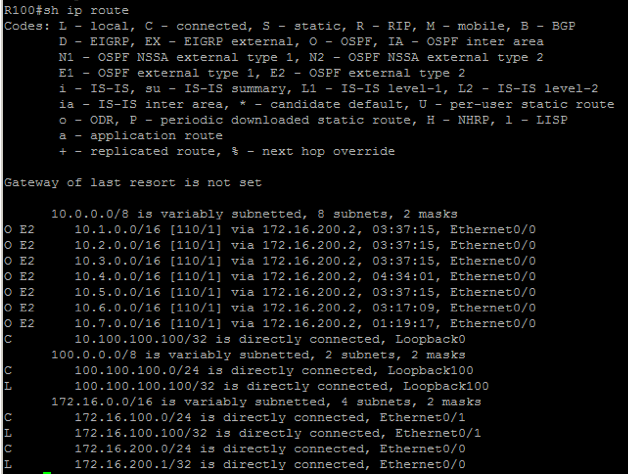
R100, the partner router, must receive the external prefixes as shown below and no other prefixes:
Section 3 VPN Technology
Section 3.1: MPLS VPN
Section 3.2: DMVPN
Section 3.3: Internet Access
Section 3.4 LAN to LAN IPsec
Section 4 Infrastructure Security
Section 4.1: Device Security
Section 4.2: Network Security
Section 5 Infrastructure Security
Section 5.1: System Management
Section 5.2: Quality of Service
Section 5.3: Network Services
Section 5.4: Network Services
RELATED PRODUCTS